Nanna Pause: When Fashion Becomes Human Again

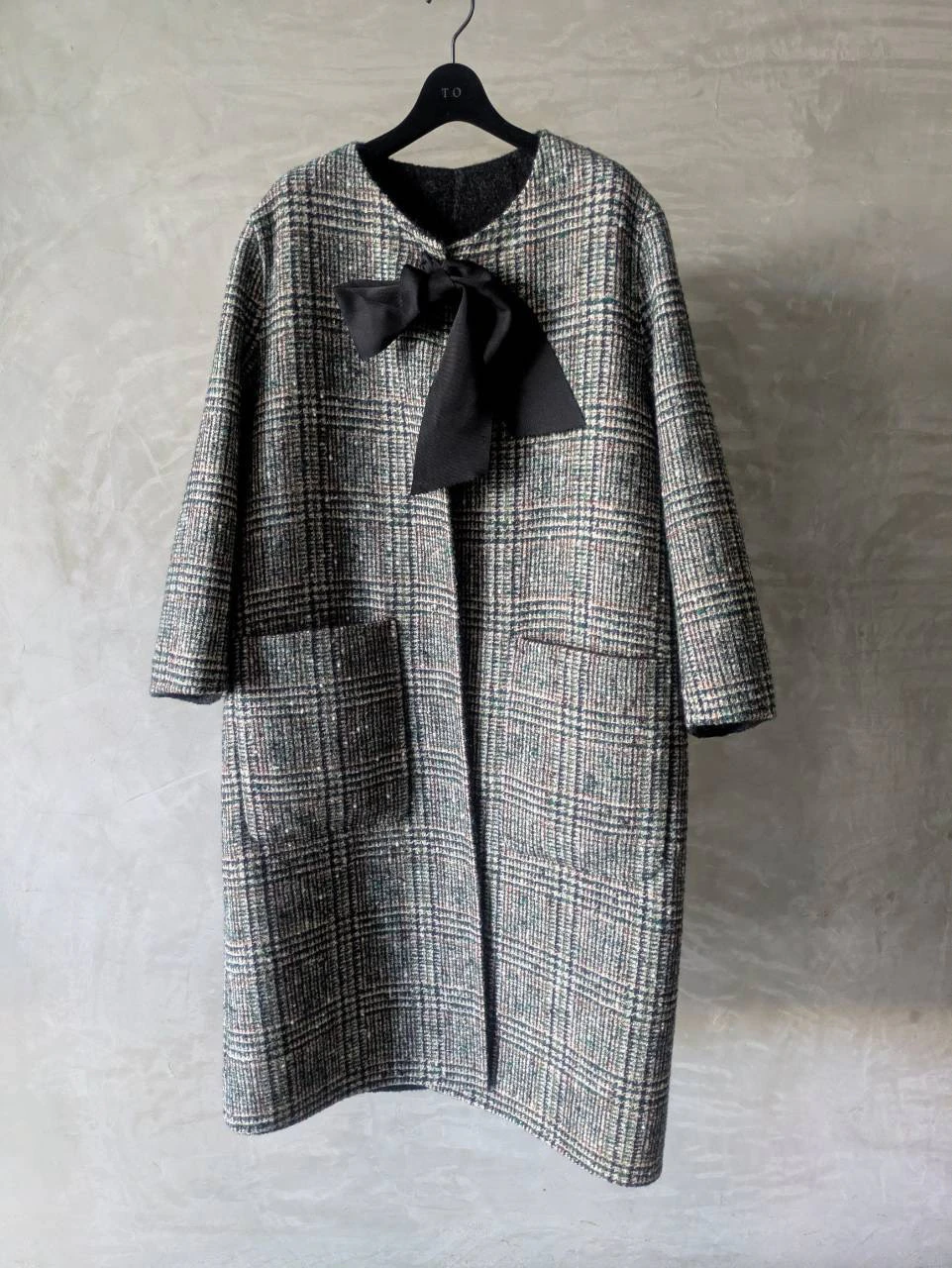
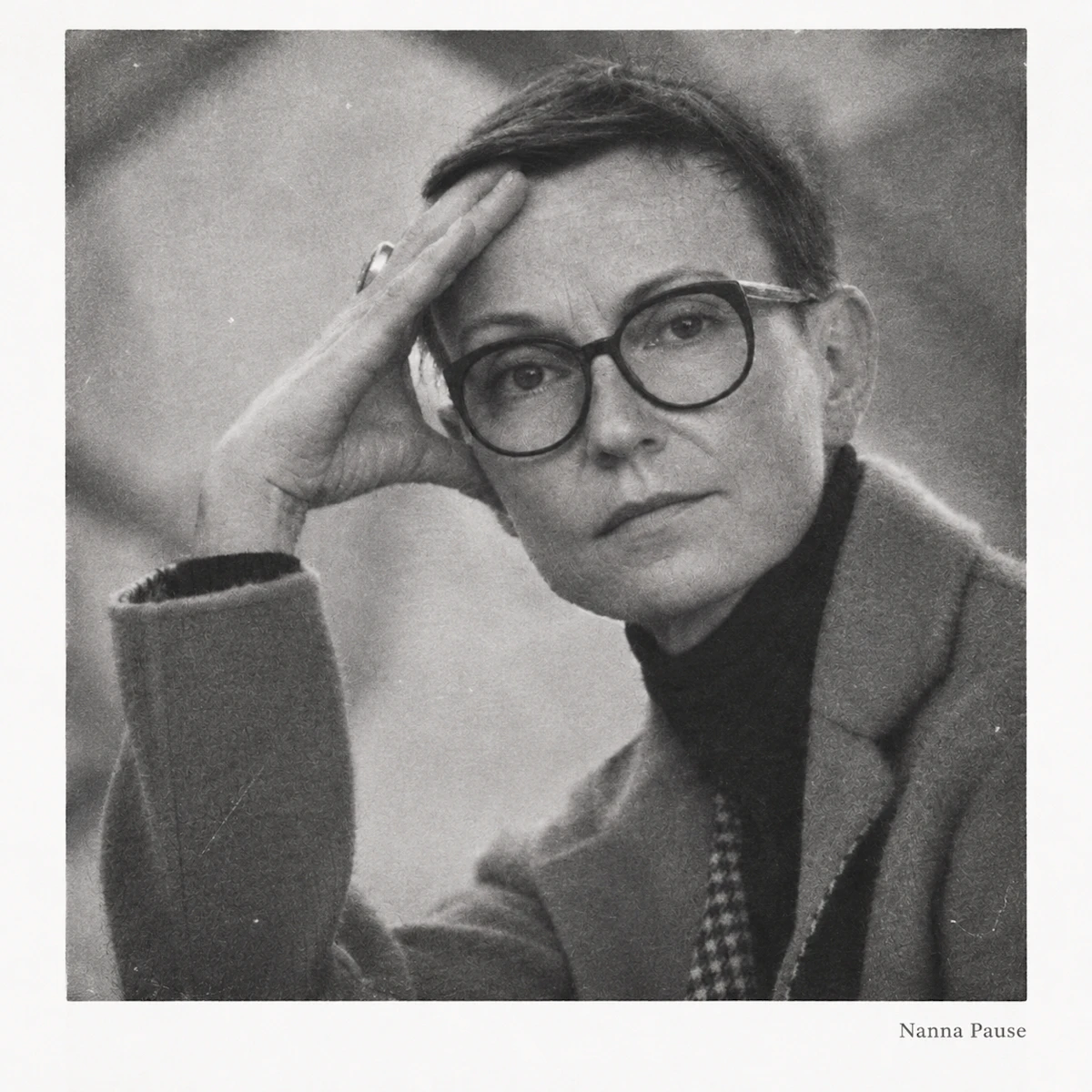
Nanna Pause’s double-faced coats are made in Sicily, Italy. When we first introduced them at T.O, we found ourselves wanting to know more about the woman behind the clothes.
There was something about her work that could not be explained by the quality of the materials or the beauty of the craftsmanship alone.
We were curious about her years in the fashion industry, her decision to establish her own brand, and her relationship with the people who make her clothes in Sicily.
We sent Nanna five questions.
Her replies were more candid and personal than we had expected.
We would like to share them with you, in her own words.
Q1.
You have worked for many years with major luxury houses such as Louis Vuitton and Dior, as well as Mantero Seta.
After all these experiences, what made you decide to start your own brand?
Nowadays I allow myself to be frank about the fact that my brand was created at a time of complete disenchantment with my profession.
I am grateful for so many wonderful experiences and encounters along the way and periods of creative growth and bliss over the years.
However towards the end of my activity for the big luxury brands I felt disconnected, empty and sad.
We produced six collections per year, churning out ever more ideas, pretending to be at the service of the original mythical creator of the brand.
We were in truth repeating the same hollow marketing formulas and basically turning into ghosts serving a ghost.
There was no sustainability with regard to the precious human resource that we all are as individuals.
So initially it was a movement away from the negative instead of towards a long-cherished dream.
The dream is an ongoing work in progress and slowly developing every day today as I have moved from survival to striving to the shy beginnings of prosperity.
This is yet a microscopic structure, but it is developing so beautifully thanks to customers like you, who are sensitive to a product that insists on quality rather than design sensation.
As my ambition for the brand is starting to bloom I still want this to be a healthy and joyful experience for everyone involved, also for myself.
Q2.
In a previous interview, you mentioned that one of the reasons you decided to work with the Zingales workshop in Sicily was the way Salvatore treated the artisans with kindness and respect.
There are many workshops with excellent skills, but you were also deeply moved by the way he treated the people working there.
Why are these human relationships so important to you and the way you make your clothes?
If I could have it my way, I would sew so much more myself and be a real MAKER.
But to be reasonable I must admit that I create greater value for everyone by designing and conceiving rather than making myself.
I’ve been in so many different structures during my apprenticeship and career.
I’ve experienced every level in the hierarchy and the full range of managing talent or the lack thereof.
How happy one can be going into work when the atmosphere is good, and everyone is treated with respect.
How lovely to be part of a family of workers, it is a blessing.
The opposite sucks the life out of us.
Work is such an important part of who we are as a person.
Feeling loved and respected during these many hours we spend with our professional family – sometimes these are more hours than we spend with our spouse or children – is essential.
We need to protect the quality of these relationships but it is difficult to keep this culture alive today.
Generational changes may not always result in a progressive development.
We are “living interesting times”. I hope to be able to contribute on my own small scale.
Q3.
In an earlier interview, you said that there is no such thing as a "Nanna Pause look" because the look comes from the customer.
Many designers want to express their own style and ideas through their clothes.
Why is it important to you that the person wearing your clothes is the main character, rather than the designer?
Here is a quote: “Human beings are works in progress that mistakenly think they’re finished. The person you are right now is as transient, as fleeting, and as temporary as all the people you’ve ever been.” Dr Daniel Gilbert Harvard Psychologist
In my work I would like to create containers which hold space for the ever-changing personal traits and preferences the person has who has invested in this high quality product.
The ingredients for these pieces are precious. The material, the making by hand, it is an investment.
Will I feel safe, kept, real, myself in it as my moods and personalities shift?
It’s not that I never give into a creative spark here and there, but I hope to make things that are less about who I am as a designer today, but that can be there for you as the wearer tomorrow or the day after.
Q4.
At T.O, we believe that the story of a piece of clothing does not end when someone buys it.
As people wear their clothes over many years, those pieces become part of their everyday lives. They carry memories and slowly become something more personal and meaningful.
We feel that your way of thinking about clothing may have something in common with ours.
What kind of relationship do you hope will grow over time between your clothes and the people who wear them?
I guess I already answered this in the previous question?
I do observe that things are carriers of sentiments, memories, identity, values. They fulfill deep emotional needs.
Just recently I attempted to go through my wardrobe to sort things out, but I only had a single afternoon.
After a short time already, I declared capitulation, not that I have so much, in the contrary.
I realized I will have to take a moment with every piece that has been with me for so long to decide whether I’m ready to let go.
That pair of Yamamoto men’s pants which was vintage when I bought it in 2002 in that thrift store in New York and has been with me ever since.
And the Jil Sander shoes I still wear which I bought in the sample sale when I worked there in 97.
I’m faithful, spiritual, maybe sentimental. I don’t easily buy, so I don’t easily let go either.
Probably I was so unhappy before I created my own brand because I was not in the right place to create that same way that I want to be in my own clothes.
Q5.
Finally, we would love to share a message from you with our customers at T.O.
Most of them are elegant women in their 50s, 60s, and even 70s, living in Kochi, a small city in Japan. They truly love fashion and have their own sense of style.
They may not know many famous designer names, but many have fallen in love with your clothes simply by seeing them, touching the fabrics, and trying them on.
Is there anything you would like to say to these women who have chosen your clothes because they genuinely love them?
Thank you very much for taking the time to share your thoughts with us.
Please let me thank YOU AND THEM, these ladies you refer to for favoring my product.
I am deeply honored and grateful for the life I live today due to your continuing kind consideration and the collaboration that we are building with every year that you return.
And YOU means indeed both of you, retailer and individual customer.
With strong independent aesthetic instinct you choose something that comes along just on its own, without the elaborate accessorizing services that bigger brands can offer, all that chic packaging and imaging and storytelling and on and on and on.
Thank you for seeing this.
Afterword
“I don’t easily buy, so I don’t easily let go either.”
This was one of the sentences that stayed with us after reading Nanna’s replies.
In 1997, when Nanna was working at Jil Sander, we were also carrying Jil Sander at T.O.
Neither of us knew of the other at the time. Nearly thirty years later, we are introducing the clothes she designs herself to our customers in Kochi.
It is the kind of connection that comes from staying in this work for a long time.
At T.O, we alter and repair clothes and also offer maintenance for bags and shoes. Many of our customers still use things they bought from us years, sometimes decades, ago.
We spend a great deal of time thinking about what to buy, but perhaps not enough about what we wish to keep.
Her way of thinking feels close to our own, and to that of many of our customers.
We hope that the people who make these clothes are happy in their work, that we can take pride in bringing them to our customers, and that those who wear them will enjoy them for many years.
Sicily and Kochi are far apart, but it means a great deal to us that Nanna and our customers at T.O can share these values through the clothes she makes.
View our Nanna Pause Collection →
Open: 10:00–18:00, Closed Thursdays
T.O
3-11-17 Harimayachō
Kochi, 780-0822, Japan
☎: +81 88 878 1102
✉:Email: cs@to1981.com