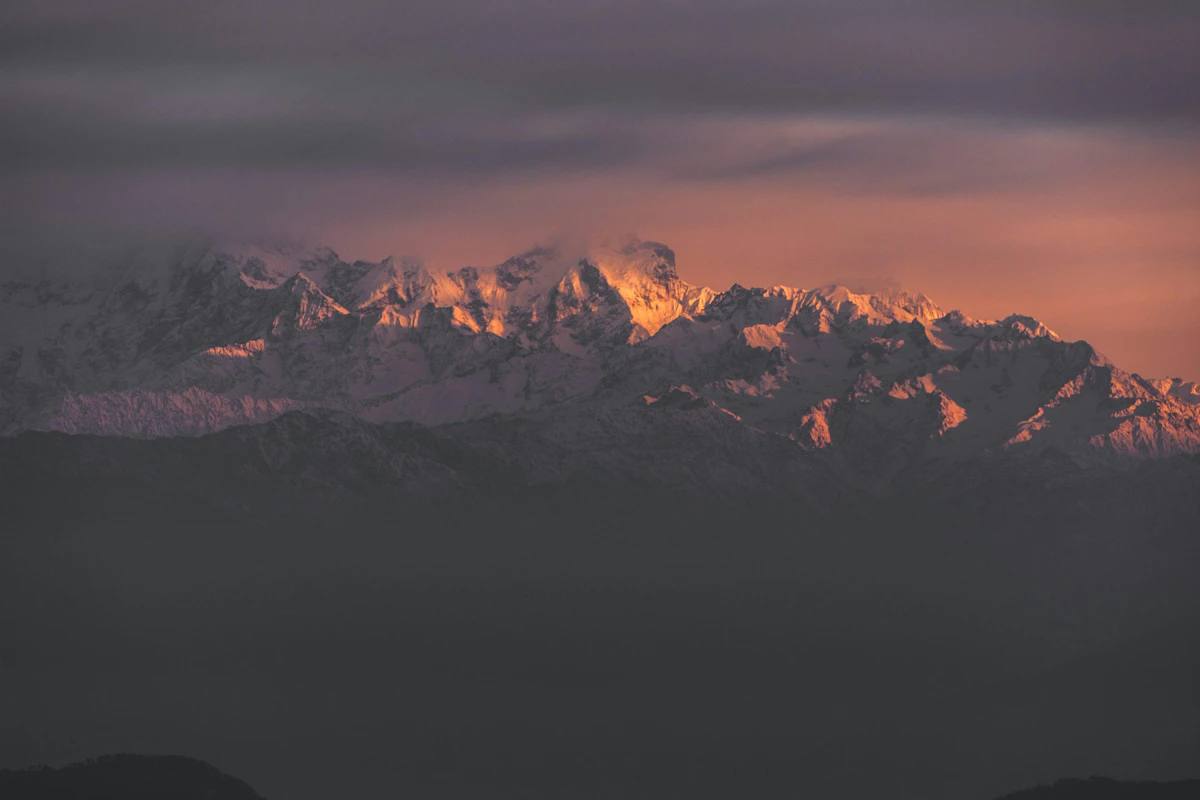
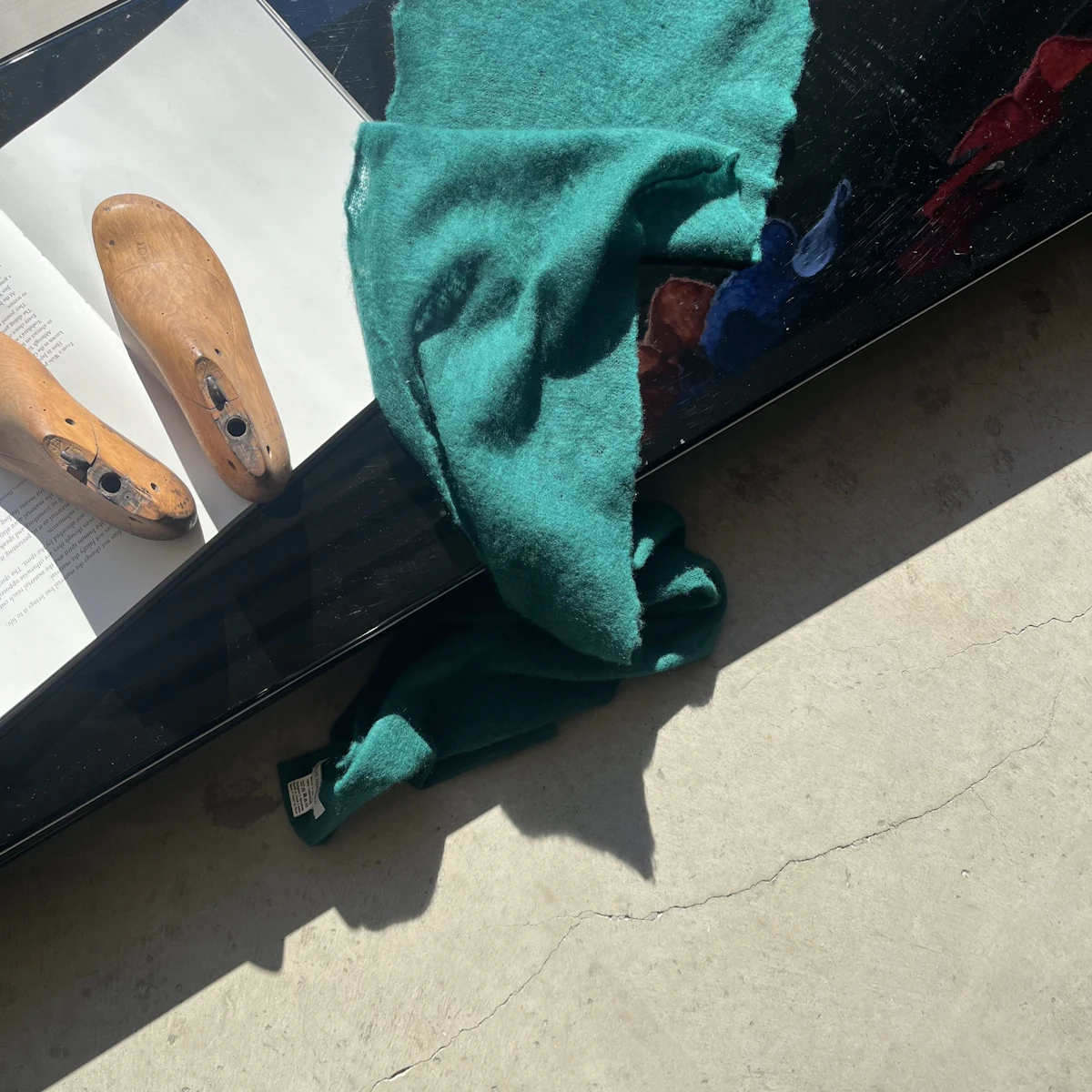
Mirror in the Sky is a cashmere brand based in Barcelona, Spain. Its name draws inspiration from a beautiful idea rooted in the Himalayas.
Imagine looking up at a mirror in the sky when you begin to lose sight of yourself. What appears in its reflection is not your physical appearance, but something deeper. The vulnerabilities you would rather keep hidden, the painful memories you have carried quietly over the years. All of these things have shaped the person you are today.
What moves us? What do we hold dear? Who do we think of as we go about our lives?
Perhaps it is these things that the mirror reflects.
With this idea at its heart, Mirror in the Sky works with artisans in Nepal to create its cashmere pieces.
A Mother and Son from Barcelona
A journey to Nepal in 2014 led Rosaura Marsiñach and her son, Pere Autonell, to discover the country's rich textile traditions.
Together, they founded a cashmere brand built around these traditional skills. Rosaura oversees the creative direction, while Pere looks after sales, finances and the business side of things.
We first met them in Paris. As it happened, I was there with my own mother.
Not only were we two mothers and their sons working together, but we were also remarkably close in age. There was an immediate sense of familiarity.
I suspect they have their fair share of arguments in Barcelona, just as we do at home. Somehow, that thought makes me feel even closer to them.
Between the Mediterranean and the Himalayas
From the architecture of Antoni Gaudí to the paintings of Joan Miró, Barcelona has a long tradition of interpreting the forms and colours of nature through art.
The colours and forms of Gaudí's architecture.
Colours born of Himalayan nature.
Rosaura draws inspiration from both the Mediterranean landscape and the Himalayan mountains.
In her cashmere pieces, the visual sensibilities of these two distant places find a common ground.
Beyond the 100% Cashmere Label
Two garments may both be labelled 100% cashmere and yet feel entirely different. The quality of the raw fibre, the way it is spun, woven or knitted, and the finishing process all contribute to its character.
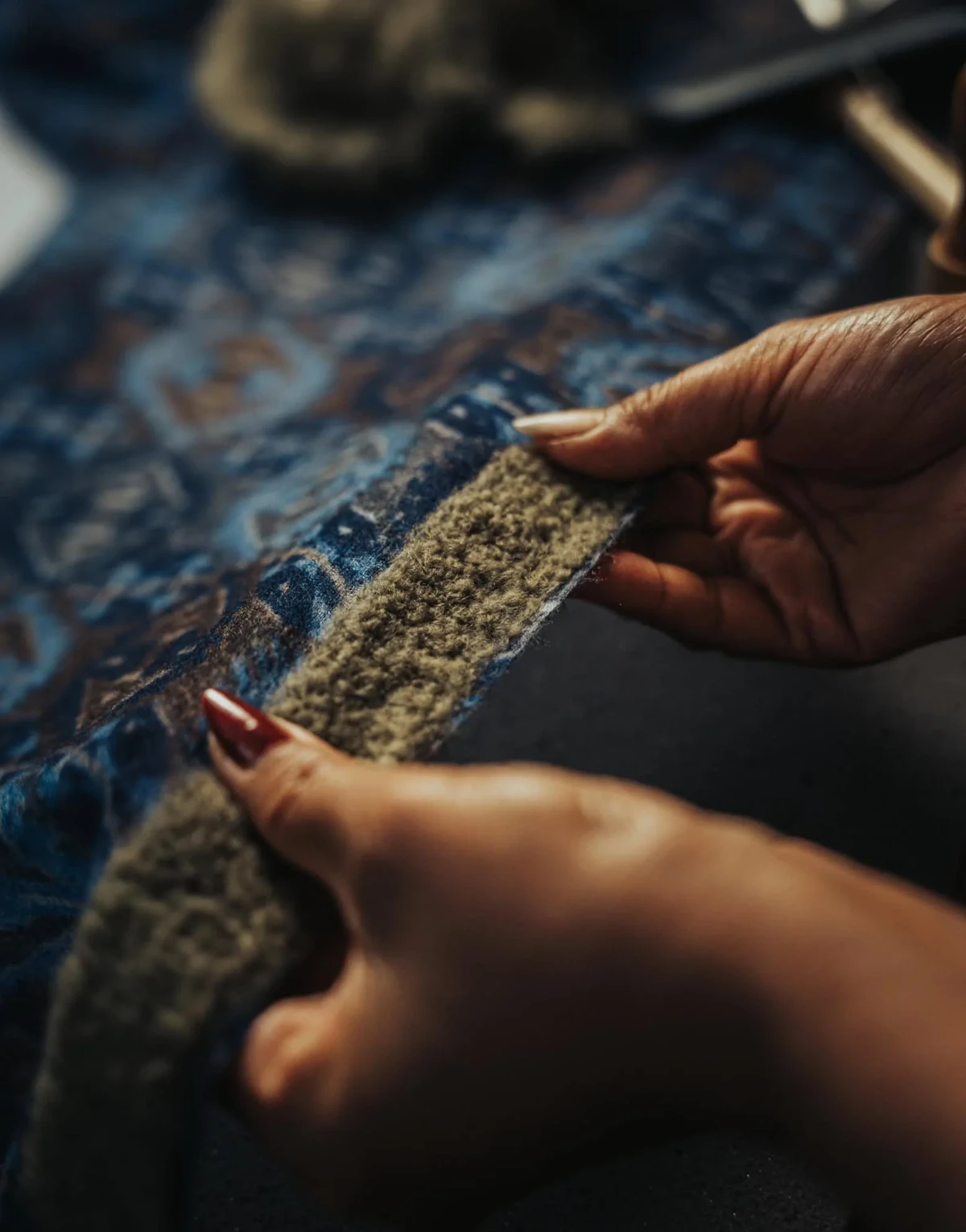
Mirror in the Sky incorporates traditional Nepalese techniques such as hand spinning, hand weaving, hand knitting and hand dyeing, depending on the piece.
Modern technology has made it possible to produce remarkably uniform textiles at relatively little cost. Perhaps this is why we have come to appreciate the subtle irregularities left by the human hand.
In Japanese calligraphy, a slight variation in the line or a fading trace of ink can reveal the movement of the brush.
There is something similar in a handwoven textile. Looking closely, we can almost picture the hands that made it and the time spent at the loom.
The Changing Geography of Elegance
For generations, many of us have looked to Italy, France and the rest of Europe for our understanding of elegance.
From Loro Piana's work with exceptional fibres to Faliero Sarti's inventive approach to textiles, European makers have long brought out the beauty of natural materials through technical expertise and a distinct aesthetic sensibility.
But as global industries and supply chains evolve, the places in which we discover elegance are changing too.
Beyond Europe lie traditions of craftsmanship and aesthetic expression that have developed over centuries. We are beginning to look at these traditions with fresh eyes.
Mirror in the Sky, bringing together Spanish artistic sensibility and Nepalese craftsmanship, is one example of this shift.
In today's economy, brand recognition and price have become familiar measures of value. Elegance, however, cannot be measured by these things alone.
Nepal's Pashmina Industry and the Future of Technology
While much of the world is caught up in the frenzy of the AI bubble, Nepal has made its centuries-old pashmina industry part of its national economic strategy.
At a time when vast sums are being invested in technologies that reduce our reliance on human labour, there are also countries looking towards a future built on what human hands can achieve.
The technologies that shape our future need not always be new.
A Small Prayer Woven into Cashmere
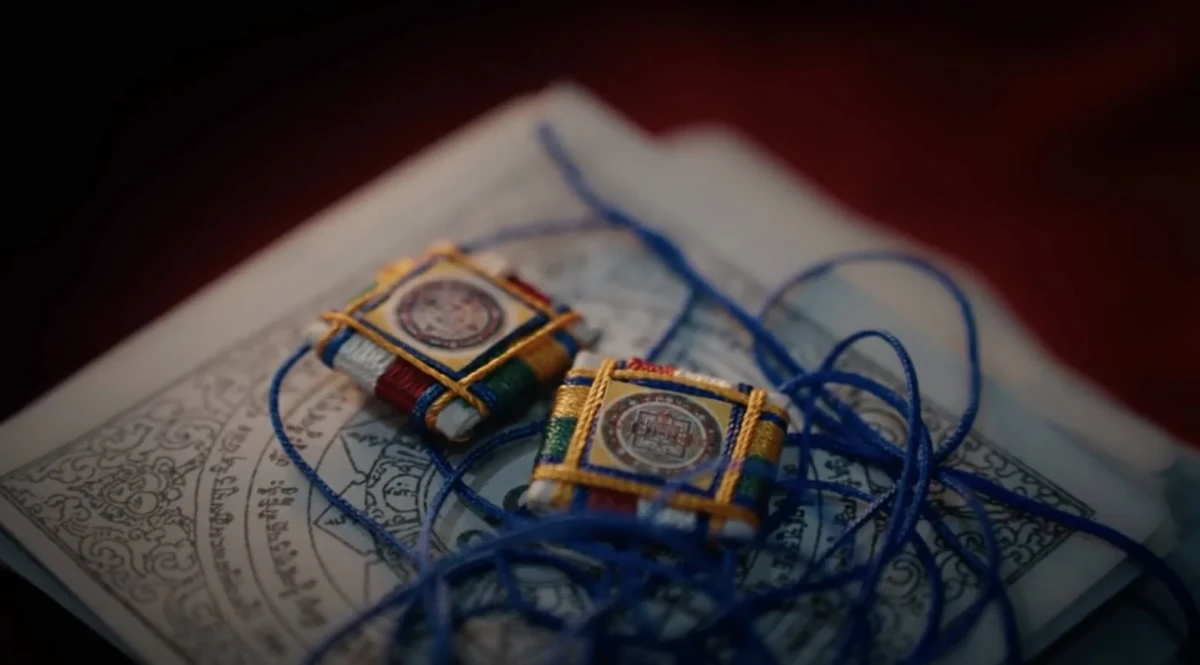
Every Mirror in the Sky piece carries a small charm.
The Kalachakra.
Its name comes from Sanskrit, meaning "wheel of time". In Tibetan Buddhism, it represents the cycles of life and the interconnectedness of all things.
Each little charm is made by hand and blessed by Buddhist monks before being attached to the finished piece.
Somewhere in the Himalayas, a prayer is offered for someone the monks have never met, whose name they do not even know.
Perhaps there are moments much like this in our own lives.
On a winter morning, we remind someone we love to wrap up warmly before leaving the house. We find ourselves wondering whether it is snowing in the town where someone dear to us lives.
I remember my mother wrapping a scarf around me as a child, rather more thoroughly than I thought necessary. It meant very little to me at the time. Only when I grew older and had someone of my own to care for did I begin to understand.
Some kindnesses take years to recognise.
And so we return to the Himalayan idea of a mirror in the sky.
If we could look into that mirror, perhaps we would see not only ourselves but also the faces of those who have wished for our happiness over the years.
Those we long to see again, and those we will see tomorrow.
And perhaps we might remember to care for ourselves as we care for others.
So much of our daily lives is spent attending to responsibilities and giving our time to other people.
The extraordinary softness of cashmere around the neck and the prayer held in that little charm might serve as a small talisman of our own.
A piece of cashmere and a quiet prayer from the distant Himalayas.
May its warmth, on a cold winter's day, remind you of someone who once wished for your happiness.